
THE APRIL DIGEST
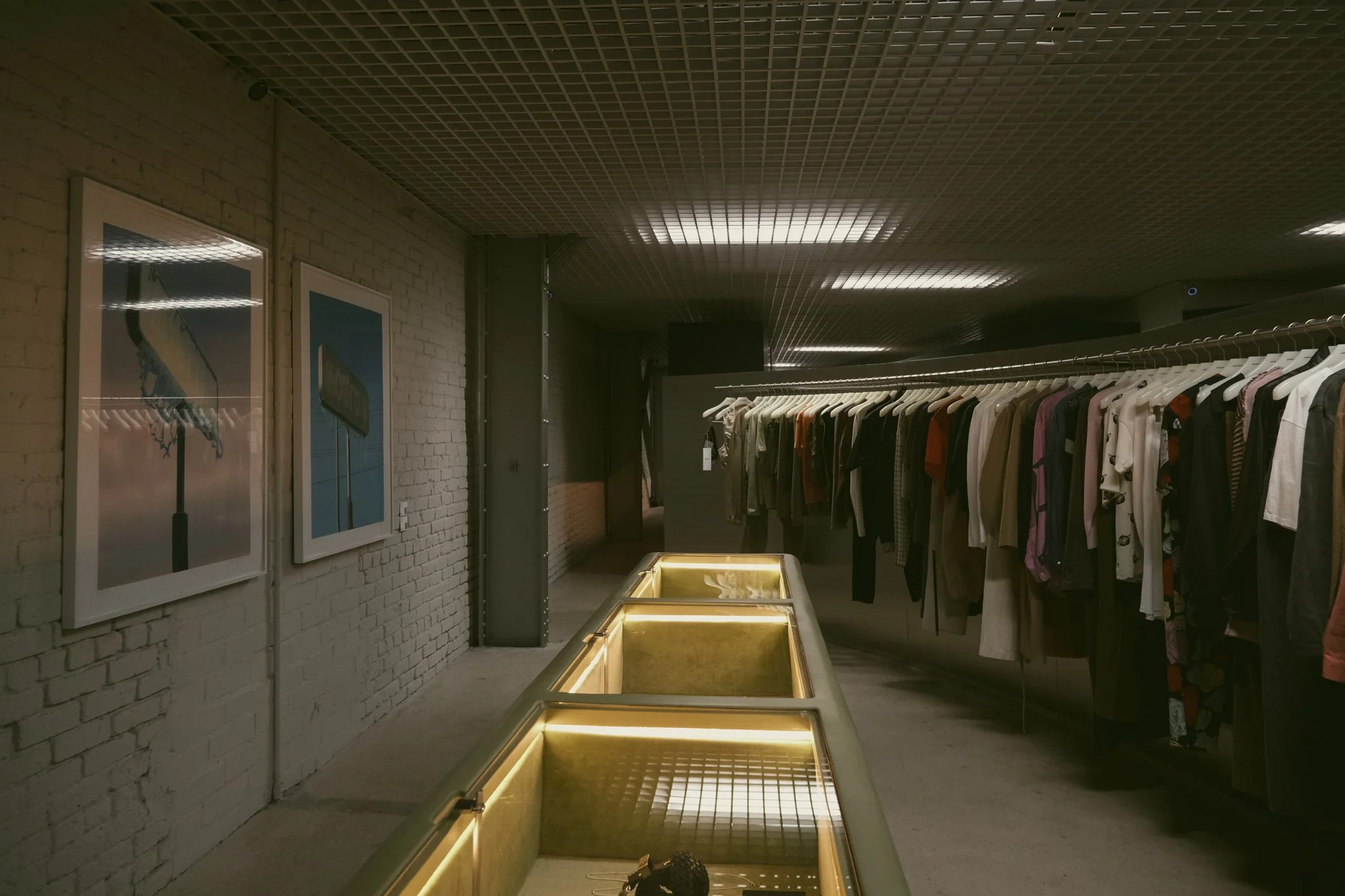
WHAT DIFFERENTIATES YOUR PHYSICAL BRAND EXPERIENCE?
DEPARTAMENTO, LA | PHOTO: BRYONY WRIGHT
The best brand experiences don't start inside — they start before you get there.
At Departamento in LA, the windows facing the central courtyard are blocked with shiny silver fabric. It catches the light and holds your gaze long enough to make you ask: what is that place, and how do I get in?
That question is the whole point.
You enter through a hall of mirrors and a double-sided mirrored door — a moment designed to disorient, delight, and make you feel like you've discovered something. By the time you reach the interior, you're already invested. Already part of it.
The inside delivers. But it's the entrance that makes it unforgettable.
This is deliberate brand architecture. Departamento knows its customer — not your average dresser, these people notice things others walk past. So they built a space that rewards that instinct. The curiosity isn't incidental to the experience. It is the experience.
Sadly for me, it's all menswear, but the design alone is worth a visit. And while you're there — Concierge Coffee, the Berlin-based roaster just outside, is reason enough to stay a little longer.
Get inspired. Stay for a coffee. Absolute win-win in my books.
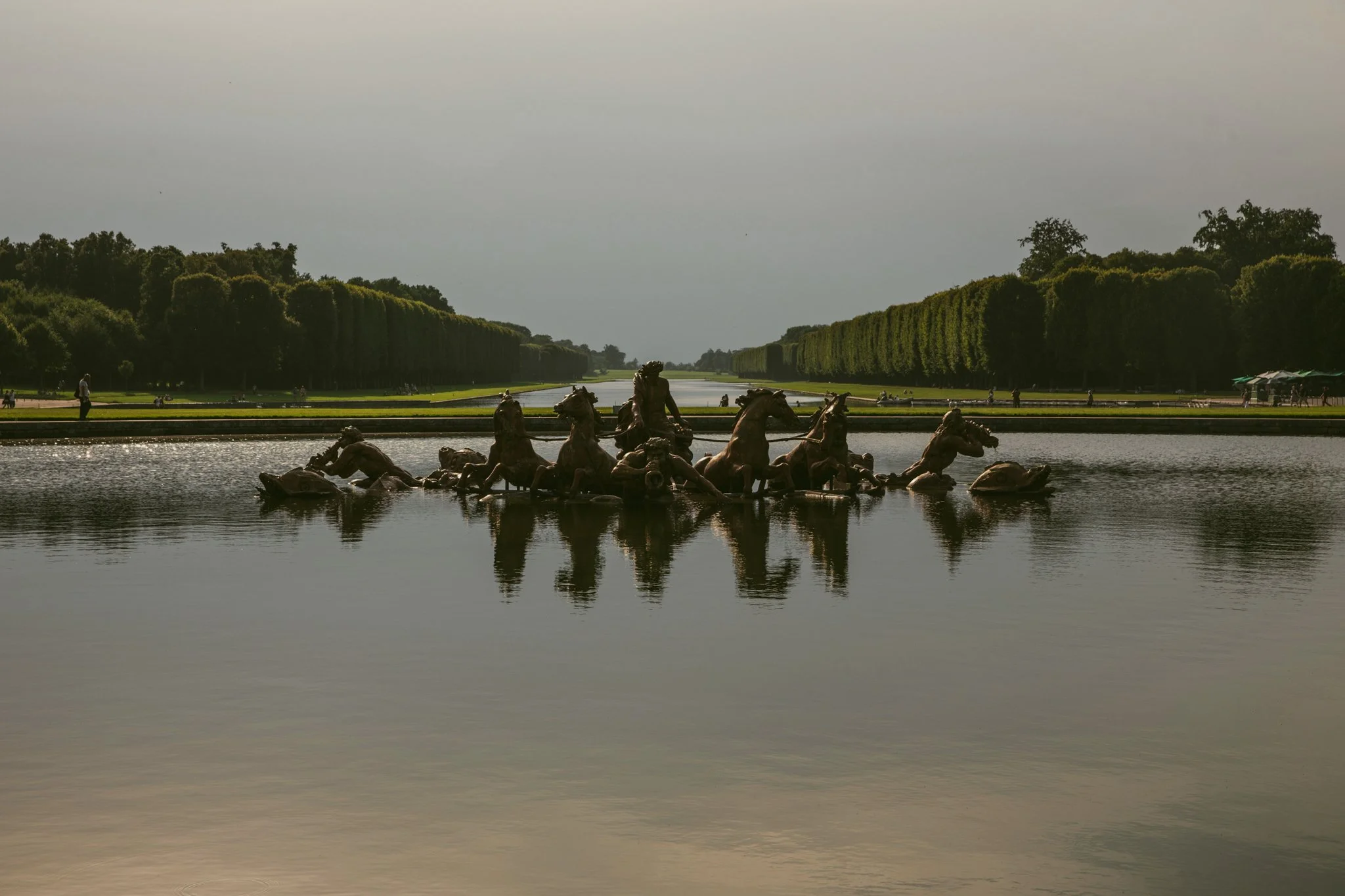
SOME PLACES STAY WITH YOU FOREVER
THE PALACE OF VERSAILLES GARDENS | PHOTO: UNSPLASH
It's cliché to love Versailles. but I do.
More specifically, I love the gardens. The palace is extraordinary, but I'm unlikely to return for that. The gardens, however — I could stay indefinitely.
What makes them so magical? It's the perfect combination of art and nature. Humans feel at peace amongst both, and here you get them simultaneously at a scale that is almost incomprehensible. Wide open spaces, grand water features, long lawns that seem to go on forever. I took a deep exhale here. After the overwhelming opulence of the Hall of Mirrors, this felt like the exact opposite energy — expansive, breezy, spacious, even with a crowd.
Yes, there are perfectly manicured sections full of design intention. But there's also a beautiful balance of open lawn and generous water features that stops it from feeling overdone.
I especially love the viewpoint from the Apollo Fountain. The sculpture depicts Apollo, the sun god, bursting forth from the water in anticipation of his daily flight above the earth — a figure of pure energy and momentum, frozen mid-emergence. What I find so compelling is the tension of it: power and stillness, mythology and water, sky and earth. It's enchanting. That's the only word for it.
I think I might love a well-designed exterior space more than any interior. There is something genuinely profound about combining nature with art — and Versailles is one of the greatest examples of that combination ever made.
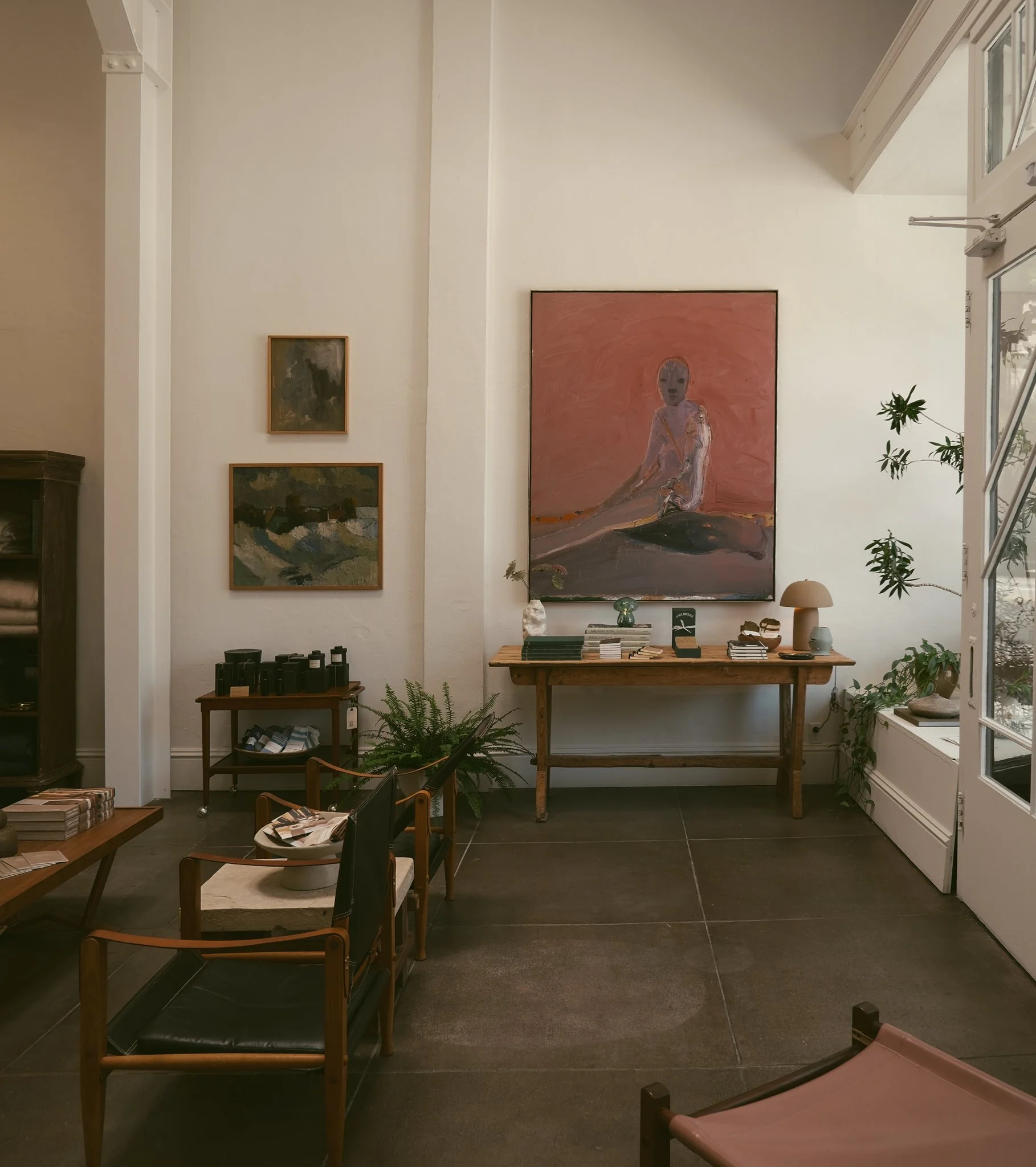
authenticity is never a trend
+COOP, LOS ANGELES | photo: bryony wright
If you wanted to feel the essence of LA style, you might go to this store.
+COOP was founded by Jenna Cooper — the creative force behind an award-winning LA real estate team, with roots in film production and a passion for design and travel. Multifaceted is an understatement. But what ties it all together is a single, consistent thread: she understands how people actually want to live.
And that is LA style in a nutshell. Lived-in luxury. Natural materials. Artful details. Carefully edited colour palettes. Playful, warm, shaped by the climate and the easy beauty of the coast.
From the floor tiles to the whitewashed wooden loft, I walked in and immediately thought — this is authentic LA style. The store itself describes its ethos as a search for what is "soulful, rare, and unexpected" — favouring the handmade, the limited edition, and the highly special. Things that exist outside of trend. That's exactly what it feels like inside.
It's not trying to be anything else. And that's precisely why it resonates. Authenticity does that — it makes you feel at home somewhere that isn't your home.
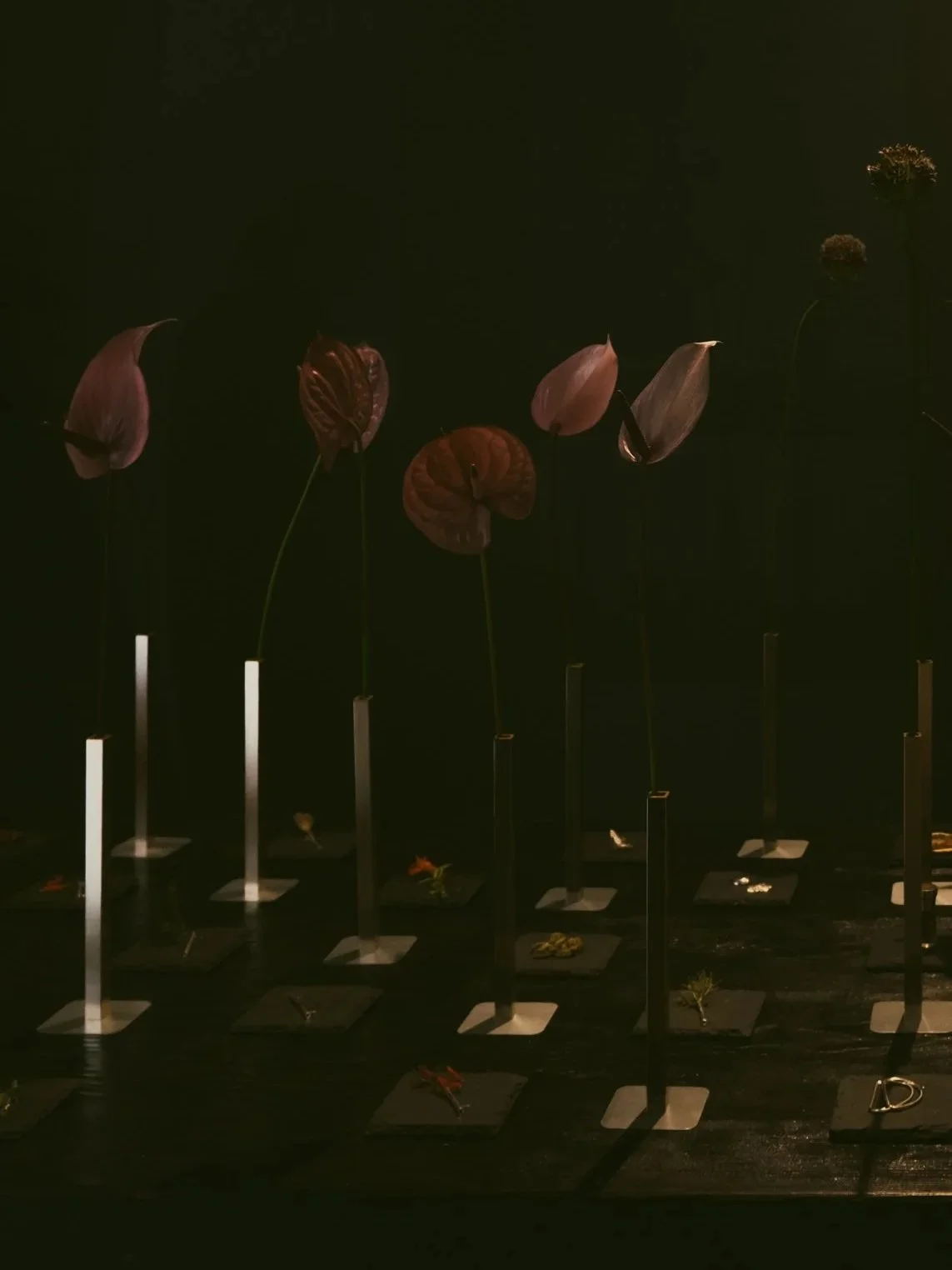
FLORALS ARE NOT AN AFTERTHOUGHT
FLORALS AT FRIDAY GALLERY, THE ROW DTLA | PHOTO: BRYONY WRIGHT
florals can make or break a photoshoot.
When everything else is dialled in and then a random plant gets thrown into the mix — I can't help but cringe. Your florals, your plants, and the vessels they live in are doing more work in a frame than most people realize. If you're investing thousands of dollars into photography, it is absolutely worth bringing in a floral stylist or creative florist to get this right.
Here's why.
Florals add a beauty and essence that simply cannot be replicated with man-made things. They are ethereal. They bring colour to a space in a way that never feels forced. They ground a scene, and they make it perfectly imperfect — which is exactly what great photography needs.
They are the je ne sais quoi of a space. And sometimes the absence of them is better than having them at all, if it's not right. A single anthurium in a considered vessel can say so much more than a giant bouquet of white roses. Nothing wrong with white roses — but they have to be right, and knowing the difference takes real discernment.
I remember working on a rendering for a company once, and one of the hardest things to get right was the colour of green and the realism of a single plant in one of the scenes. One plant. That's how much it stands out — even in a render, even digitally, the eye goes straight to it.
The wrong floral is worse than no floral. The right one is everything.
Do you agree?
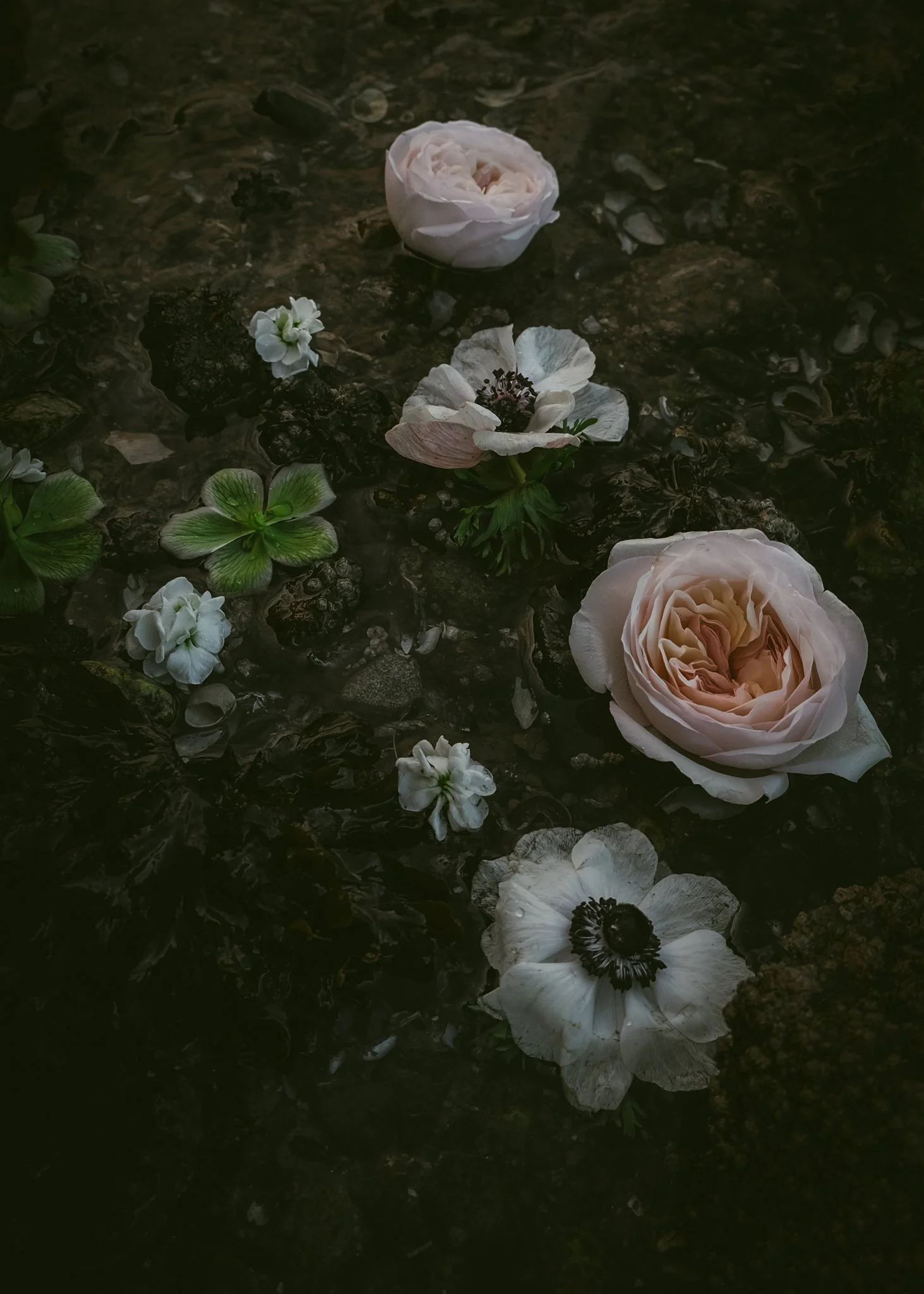
WHAT COMES FROM AUTHENTIC SPACIOUSNESS
FROM A CREATIVE SHOOT IN VANCOUVER | PHOTO: BRYONY WRIGHT
CREATE SPACE IN YOUR MIND
Walk without headphones.
Sit in stillness.
Shower without music.
Meditate on a mantra.
Create without pretense.
Allow your mind to rest.
This is where creativity actually comes from.
IMPERFECTION IS COOL
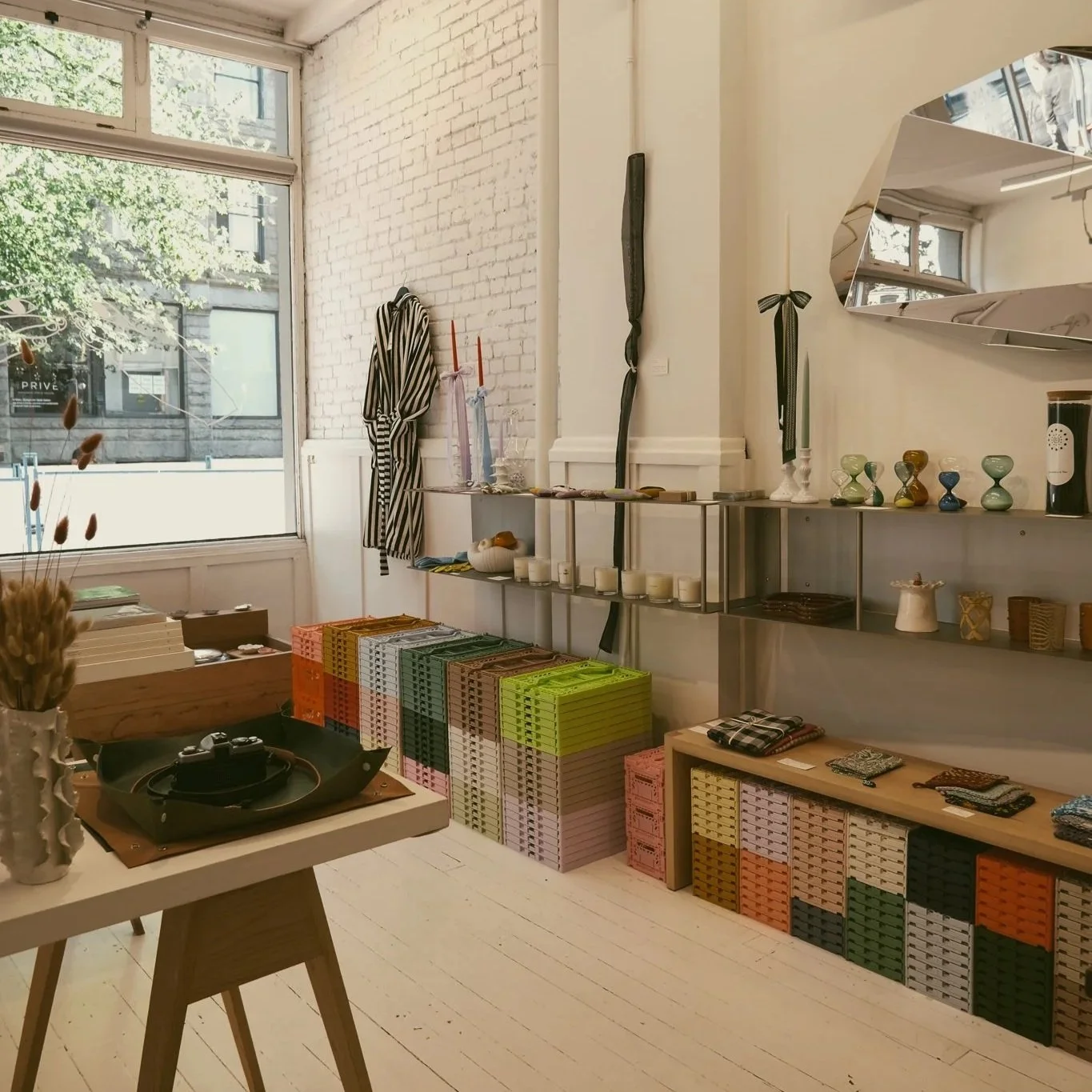
NEIGHBOUR BOOKS AND OBJECTS, VANCOUVER | PHOTO: BRYONY WRIGHT
Why do stores in heritage buildings feel immediately cooler?
I'm from a young city — Vancouver, Canada. We don't have a lot of historical architecture to work with. But my favourite spaces in the city are almost always in the oldest buildings we have. That pattern made me stop and think about why.
It's because they're imperfect.
And as much as we try to fight it, we actually love imperfection. Character is authentic beauty — and our eyes have been trained to recogniZe it over thousands of years of looking at nature and other humans. Manufactured perfection, by comparison, has only really been around for a few hundred years at best. It's new. It's unfamiliar. Somewhere deep down, we know the difference.
Old architecture carries history in its walls. The worn edges, the uneven floors, the details that were made by hand rather than machine — none of it was designed to be charming. It just became that way through time. And time is the one thing money genuinely cannot buy.
Worth remembering the next time you're spiralling over a scratch in your new hardwood or a mark on your white stone countertop. That's not damage. That's the beginning of character.
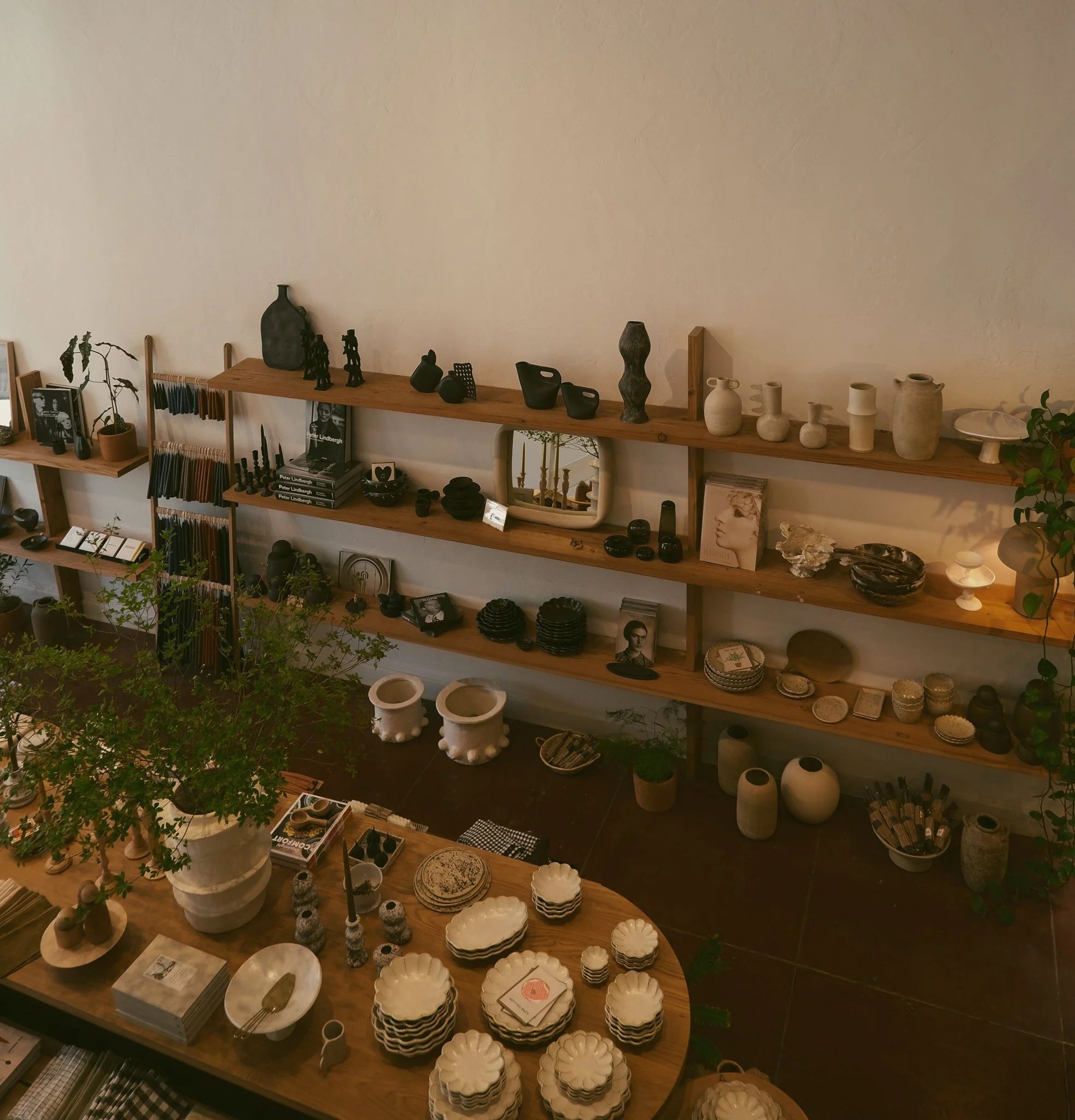
+COOP LOS ANGELES | PHOTO: BRYONY WRIGHT
If this BRIEF resonateD, I share more ways of seeing — creative references, ideas, and inspiration — on Instagram and Pinterest.
The work that could only come from you — made now, not later — is the work that can never be replicated.
Consider this Digest a study in the power of authenticity.
WHEN LESS is THE WHOLE POINT
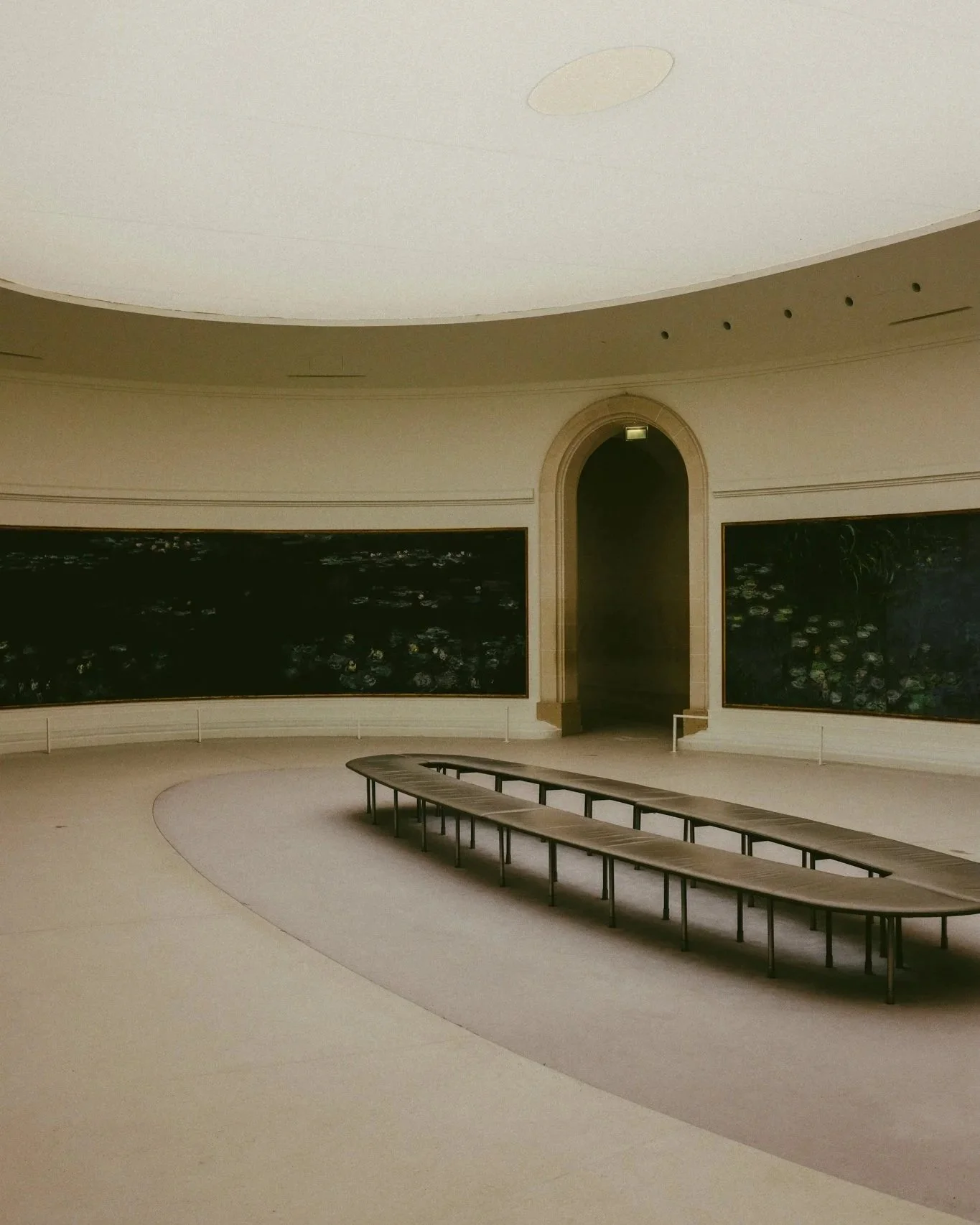
Musée de l'Orangerie, PARIS | PHOTO: UNSPLASH
MORE IS NOT ALWAYS BETTER
The Musée de l'Orangerie in Paris is home to Monet's Waterlily canvases — eight monumental panels arranged across two oval rooms, and little else. That restraint is precisely what makes it one of the best museums in the city.
The paintings are stunning, obviously. But what makes L'Orangerie genuinely singular is everything around them. The rooms themselves are oval — no corners, no visual breaks — which means the canvases are curved to fit the architecture. Each panel was made to order, shaped to wrap across the curved walls. I haven't experienced anything quite like it elsewhere.
The immersive quality is deliberate. Monet wanted to create "the illusion of an endless whole, of water without horizon or bank" — and standing inside those rooms, surrounded on all sides, you feel it. It's as close as you'll get to being at the lily pond itself. (Which, for the record, I do recommend visiting his house in Giverny.)
Then there's the light. Natural light filters in from overhead skylights, intended to mimic the ever-changing light of the day — the same quality of light Monet spent his life chasing on canvas, now softly diffusing across the work itself.
And the building? It was originally built by Napoleon III in 1852 to shelter the citrus trees of the Tuileries garden from the cold. Imagine that — a greenhouse for orange trees, now housing one of the greatest achievements in the history of painting.
Compared to the Louvre, this felt breezy. The scale, the focus, the sense of space — a must-do in Paris.
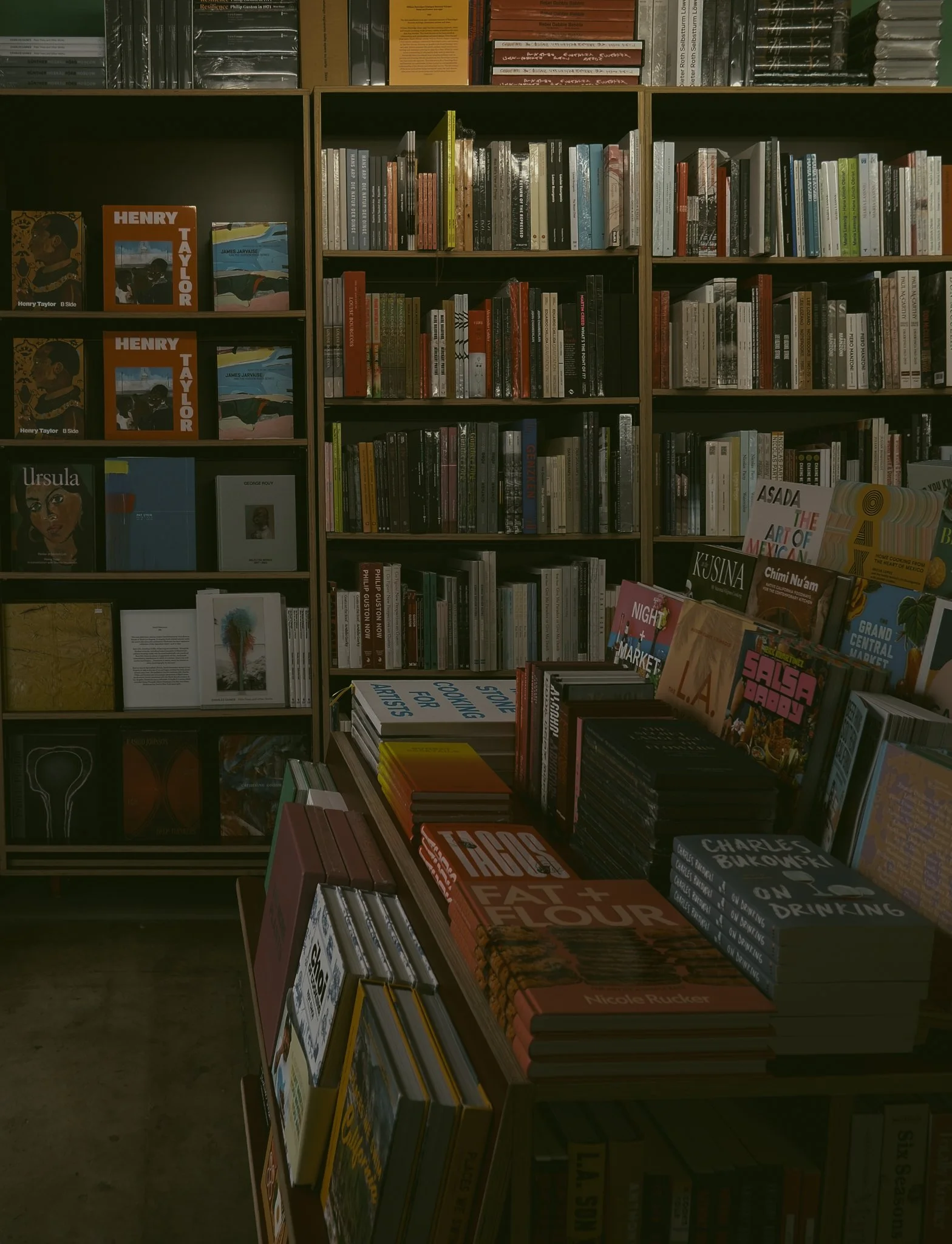
HAVE YOU EVER MET SOMEONE WHO DIDN'T LOVE A BOOKSTORE?
artbook at hauser & wirth, dtla | photo: bryony wright
What is it about art bookstores?
Does everyone love them as much as I do, or is it just me?
I think it's the covers. In an art bookstore, the cover is the first work of art — before you've even opened the thing. There's a reason a record store feels cooler than a CD shop (not that they exist anymore), and I think the same rule applies here. Scale matters. Physicality matters. Being drawn across a room by an image you can't quite read from a distance — that's an experience a screen will never replicate.
And then you open it. Incredible images, unexpected subject matter, worlds you didn't know existed ten minutes ago. Art books contain multitudes — photography, graphic design, interior design, architecture, painting, writing — entire creative universes compressed into a single object. Each one represents a decision someone made to say: this is worth publishing. This deserves to exist in the world. That kind of conviction is contagious.
No wonder it feels like magic to be in there.
Artbook at Hauser & Wirth in Downtown LA is exactly that kind of place. Hauser & Wirth is one of the most respected galleries in the world, and the bookstore is a natural extension of that sensibility — rigorous, beautiful, worth your time. If you find yourself in DTLA, go in. Pick something up. Open it without knowing what's inside.
And yes — who doesn't have a quiet wish to one day own a bookstore, café, flower shop, or some combination of all three? Just me? I don't think so.
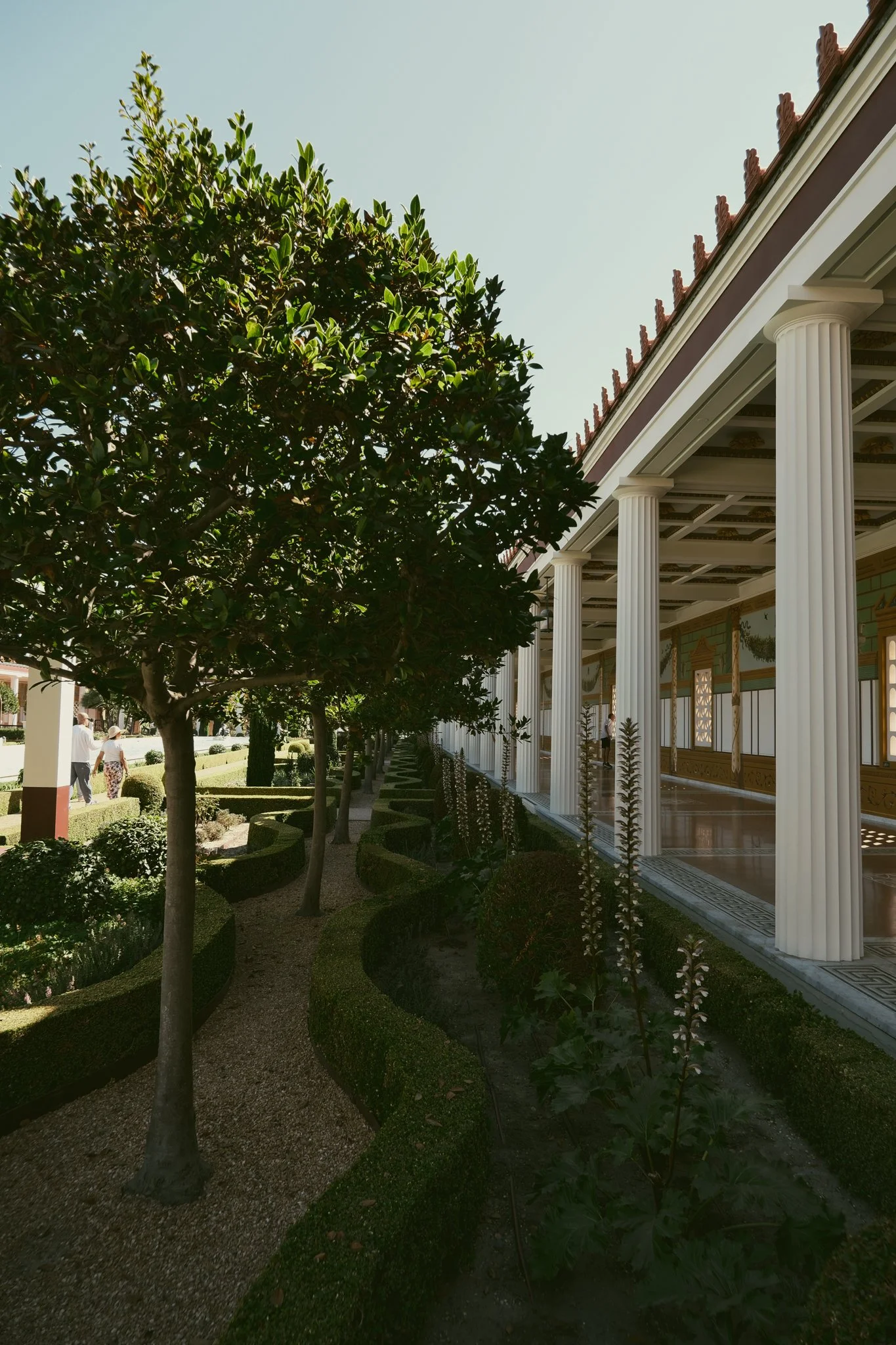
MONEY CAN’T BUY AUTHENTICITY
THE GETTY VILLA, MALIBU | PHOTO: BRYONY WRIGHT
Can trying to replicate the past — from somewhere else — ever truly work?
I visited the Getty Villa in Malibu, and while there were genuinely incredible elements — epic marble floors, remarkable collections, moments of real beauty — I couldn't shake a feeling I couldn't quite name at first. It took me a while to land on it: inauthenticity.
The desire to replicate ancient Roman and Greek history through statues, murals, and design lifted wholesale from other cultures — it just fell flat for me. No matter how much money and intention went into it, something was missing. Because money cannot simply buy authenticity. It truly hits different when it's not there.
There was so much beauty and potential in this PROPERTY. If it would only just be itself instead of trying to be something else, it might be one of the MORE compelling VISITS IN THE AREA. Instead it left me with a quiet sense of unease I couldn't shake.
Having spent a decent amount of time in Europe — where history doesn't have to be forced, where the ancient is simply there — I found the Getty Villa a little off-putting, if I'm being honest. A useful reminder that authenticity cannot be constructed. It can only be earned.
I probably won't be back.
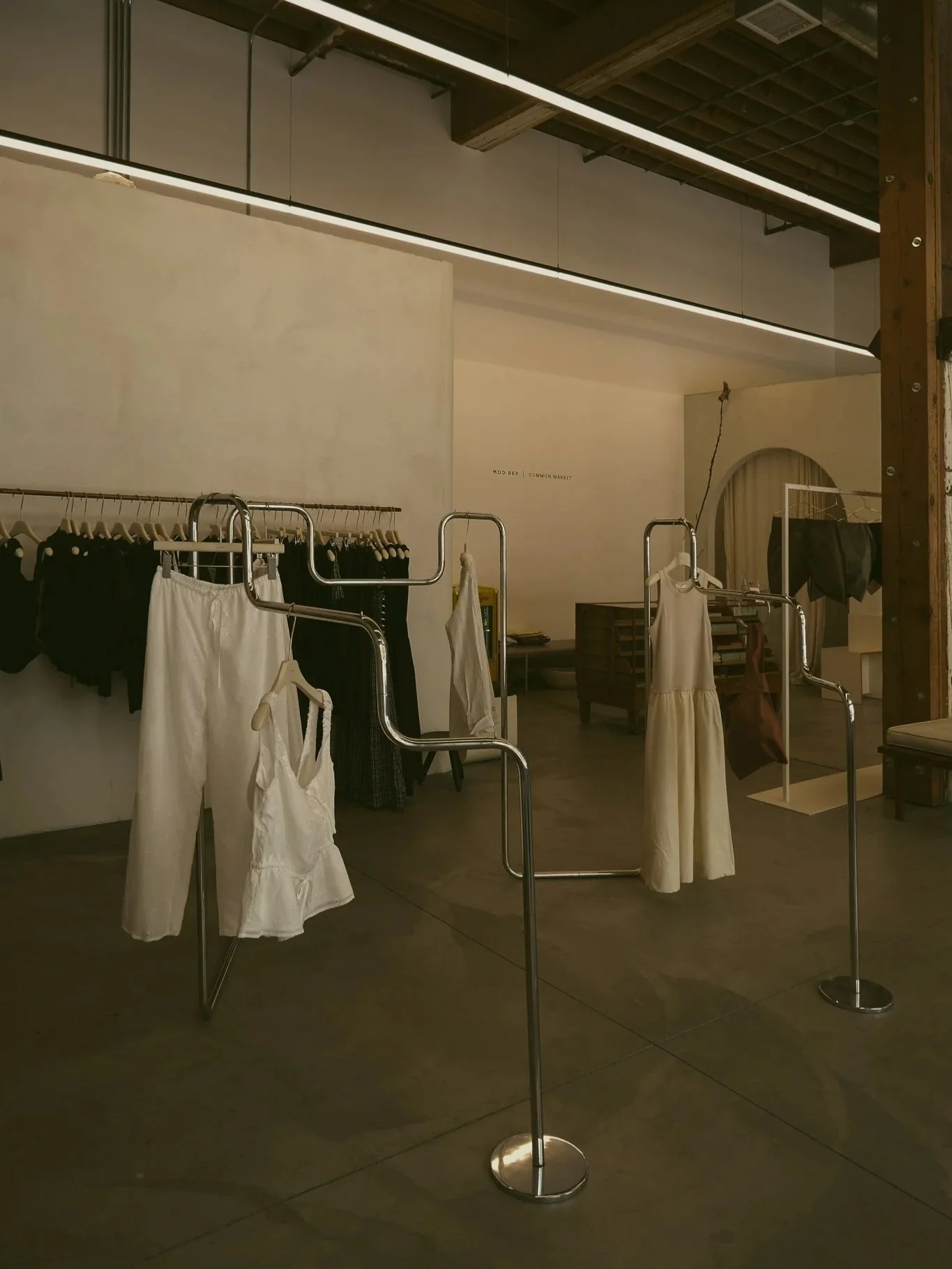
HOW DO YOU STAND OUT WHEN LESS IS MORE?
LVIR, THE ROW DTLA | PHOTO: BRYONY WRIGHT
Minimalism doesn't mean skipping creativity.
Even the most pared-back retail environment still has to BE COMPELLING. Walking into LVIR at The Row in DTLA, the space is quiet, considered, restrained — and then you notice the clothing racks. Custom-designed, unexpected, immediately memorable. One creative decision in an otherwise minimal space, and suddenly the whole thing feels one of one.
That's the lesson. You don't need to fill every corner to stand out. You need to find one thing that's yours — and commit to it.
Getting creative should feel like play. And when it does, that energy transfers. It makes the experience better for everyone in the room — the team, the customer, the people who photograph it, the people who walk past and stop. Standing out can genuinely be this simple.
LVIR describes their own philosophy as making clothing that "naturally melts into the attitudes and emotions of the person who wears it." The store does the same thing. Quiet confidence, A FEW great detailS, nothing wasted.
That's not boring. That's discipline.
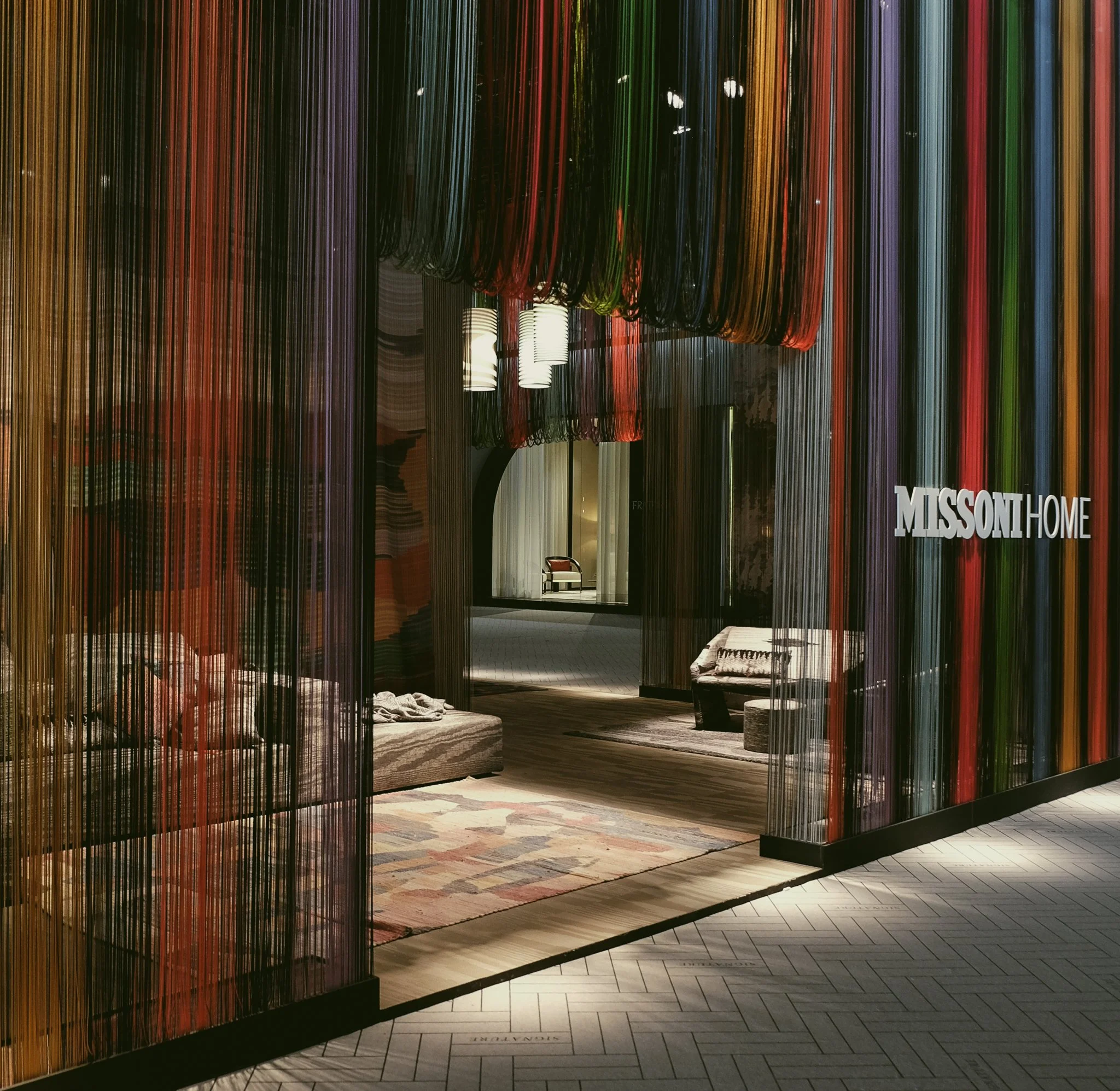
WHAT STOPS PEOPLE IN THEIR TRACKS AT A TRADE SHOW?
MAISON & OBJET IN PARIS | PHOTO: BRYONY WRIGHT
Your trade show booth should not be a replica of your store.
No matter how impressive that store experience is, the temporary nature of a trade show is not a limitation — it's an invitation. The constraints of the format are precisely what make it an opportunity to push creativity further than you normally would.
But design alone isn't enough. The real question is: what is the experience? Beyond how it looks, what is actually happening there? Multi-dimensional engagement is what separates the booths people remember from the ones they walk past.
Before you go too far down any creative path, start here:
What are people going to photograph? What will they remember a week later? What is going to stop someone mid-stride and make them want to come in? What does this experience say about your brand in a sea of other booths? And if there were an award for most creative booth — what would make yours the obvious choice?
These questions aren't obstacles. They're the brief. Answer them first, and the creative direction tends to reveal itself faster than you'd expect. The solution is often simpler and more cost-effective than you assumed.
The temporary nature of it is the whole point. No permanent constraints. No compromises for longevity. Just a moment in time to say exactly who you are — louder and more creatively than anywhere else.
Use it.
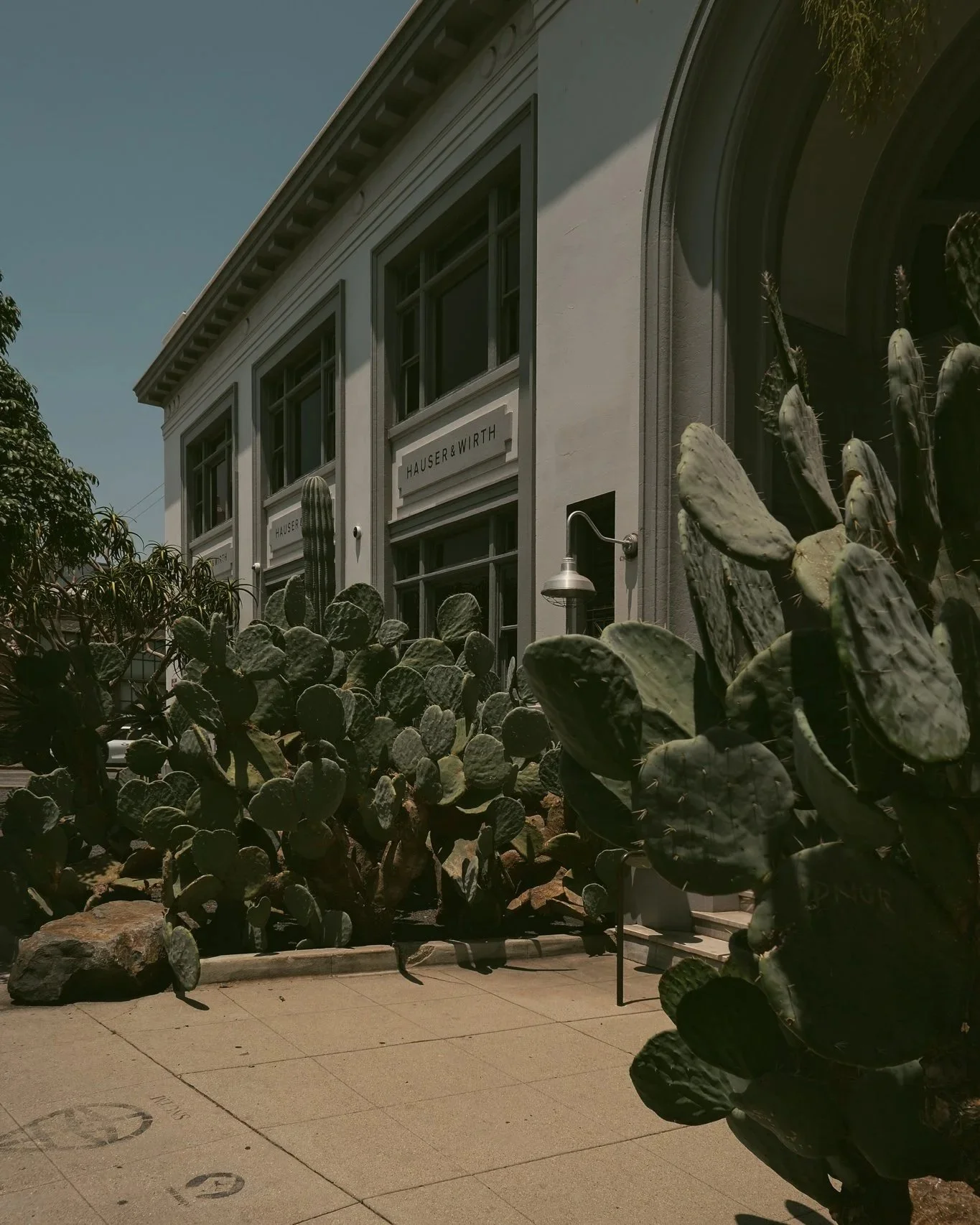
HAUSER & WIRTH, DTLA | PHOTO: BRYONY WRIGHT